
Why India Needs a School of Leadership — Not Another International School
There are 972 international schools in India as of January 2025 (ISC Research, 2025). In 2000, there were fewer than ten (Times of India, 2025).
The growth is staggering — a hundred-fold in a single generation. As of January 2025, India is the world’s second-largest host of international schools — behind only China (ISC Research, 2025). New campuses are opening not just in Mumbai and Bangalore, but in Sangli, Davangere, and Betul (Times of India, 2025). The aspiration engine is running at full throttle.
And yet, a discomforting question lingers: What exactly are we internationalising towards?
Because here's what the data says on the other side. The Economic Survey 2023–24 reports that only 51.25% of India’s graduates are employable (India Today, 2024). Mercer|Mettl’s Graduate Skill Index 2025 puts overall employability at 42.6% — and reports that employability in key human skills like communication (55.1%), critical thinking (54.6%), and leadership (54.2%) is far from universal (ThePrint, 2025). Not calculus. Not organic chemistry. Leadership.
Something in the pipeline is broken. And the answer might not be another international school — but a fundamentally different kind of school altogether.
The "International" Illusion
Let's be honest about what "international" has come to mean in Indian education.
In much of the world, an international school serves expatriate families — diplomats, corporate transferees, global nomads. The curriculum (IB, IGCSE, or otherwise) is designed to be portable, so a child moving from Singapore to São Paulo doesn't miss a beat.
In India, however, the word "international" has become a branding exercise. There is no regulation governing the use of the label. A CBSE school can call itself "international" if it wants to — and many do. What parents are often paying a premium for isn't a global education. It's the feeling of one: a glass-fronted building, English-medium instruction, perhaps a smattering of foreign exchange programmes.
Even the genuinely affiliated schools — the 225-plus IB World Schools and 550-plus IGCSE campuses now operating in India (Times of India, 2025) — face an uncomfortable paradox. Their curricula were designed for children navigating between cultures, not for children rooted in one. A student in Bangalore studying the same humanities syllabus as a student in Brussels is not becoming "global." They are becoming generic.
There's a word for this that educators rarely use in marketing materials: mimicry. It is the difference between fluency and imitation. A child who can discuss Mughal governance and the Magna Carta with equal depth is globally fluent. A child who knows the latter but not the former is simply displaced.
What the World Actually Rewards
Here is an irony that should keep every school principal up at night: the world's most selective universities and most demanding employers are actively moving away from the metrics that Indian education still optimises for.
Harvard’s admissions criteria make it explicit: academic accomplishment matters, but so do community involvement, leadership, distinction beyond academics, and personal qualities and character (Harvard College FAQ).
The World Economic Forum’s Future of Jobs Report 2025 — based on surveys of over 1,000 global employers representing more than 14 million workers — lists analytical thinking first, with resilience/flexibility/agility and leadership/social influence among the top rising core skills (WEF, 2025 PDF).
And closer to home, the picture is stark. When barely ~55% of graduates demonstrate employability in communication, critical thinking, and leadership (ThePrint, 2025), it means nearly half of our young adults enter the world without the human skills that increasingly determine outcomes.
India's education system — across boards, across price points — still overwhelmingly optimises for one thing: the exam. Everything else, from public speaking to ethical reasoning to managing a team, is left to chance, or to the rare teacher who goes beyond the syllabus.
What Finland, Singapore, and Japan Understood
The countries that consistently lead global education rankings didn't get there by importing someone else's system. They built their own — rooted in their culture, aligned to the world.
Finland redesigned its national core curriculum to emphasise school culture, student participation, and transversal competences — a uniform national foundation that still enables municipalities and schools to build locally relevant curricula (Finnish National Agency for Education).
Singapore made bilingual education foundational: English for global fluency, and mother tongue languages as anchors of culture and identity — implemented through formal schooling (SG101, Government of Singapore).
Japan’s tokkatsu (special activities) tradition treats values, social skills, and emotional stability as part of the official curriculum — not extracurricular add-ons (University of Tokyo — Tokkatsu).
The common thread is unmistakable: these nations didn't choose between being rooted and being ready. They understood that rootedness is readiness. A child who knows who they are doesn't shrink in a room full of strangers. They contribute.
The Case for a School of Leadership
India has 1.5 million schools. It has more than enough institutions teaching children how to score. What it does not have — what it has never systematically built — is a school designed to teach children how to lead.
Not "leadership" as a glossy module bolted onto an existing curriculum. Not a weekend workshop or a summer camp. But leadership as a foundational design principle — the way Finland designs around transversal competences or Japan designs around tokkatsu.
What would such a school look like?
It would be rooted in India — not as a nativist posture, but as an intellectual foundation. Children would study Indian constitutional philosophy alongside global democratic traditions. They'd learn about Nalanda and the Library of Alexandria in the same semester. The goal wouldn't be to produce students who are "Indian" or "international," but students who are both — effortlessly, authentically.
It would treat communication, ethical reasoning, and public agency as core subjects, not afterthoughts. A child who can lead a classroom discussion at twelve, mediate a conflict at fourteen, and present a proposal to a panel at sixteen is not just "well-rounded." They are prepared — for university admissions that increasingly demand it, for workplaces that desperately need it, and for a democratic society that depends on it.
It would be accessible, not exclusive. The aspiration for leadership development shouldn't be gated behind fees that only the top 1% can afford. A mass-premium model — rigorous, world-class, but priced for the professional middle class — would signal that leadership is not a luxury. It's a right.
This is the school India hasn't built yet. Not another international school. A school of leadership — rooted in India, ready for the world.
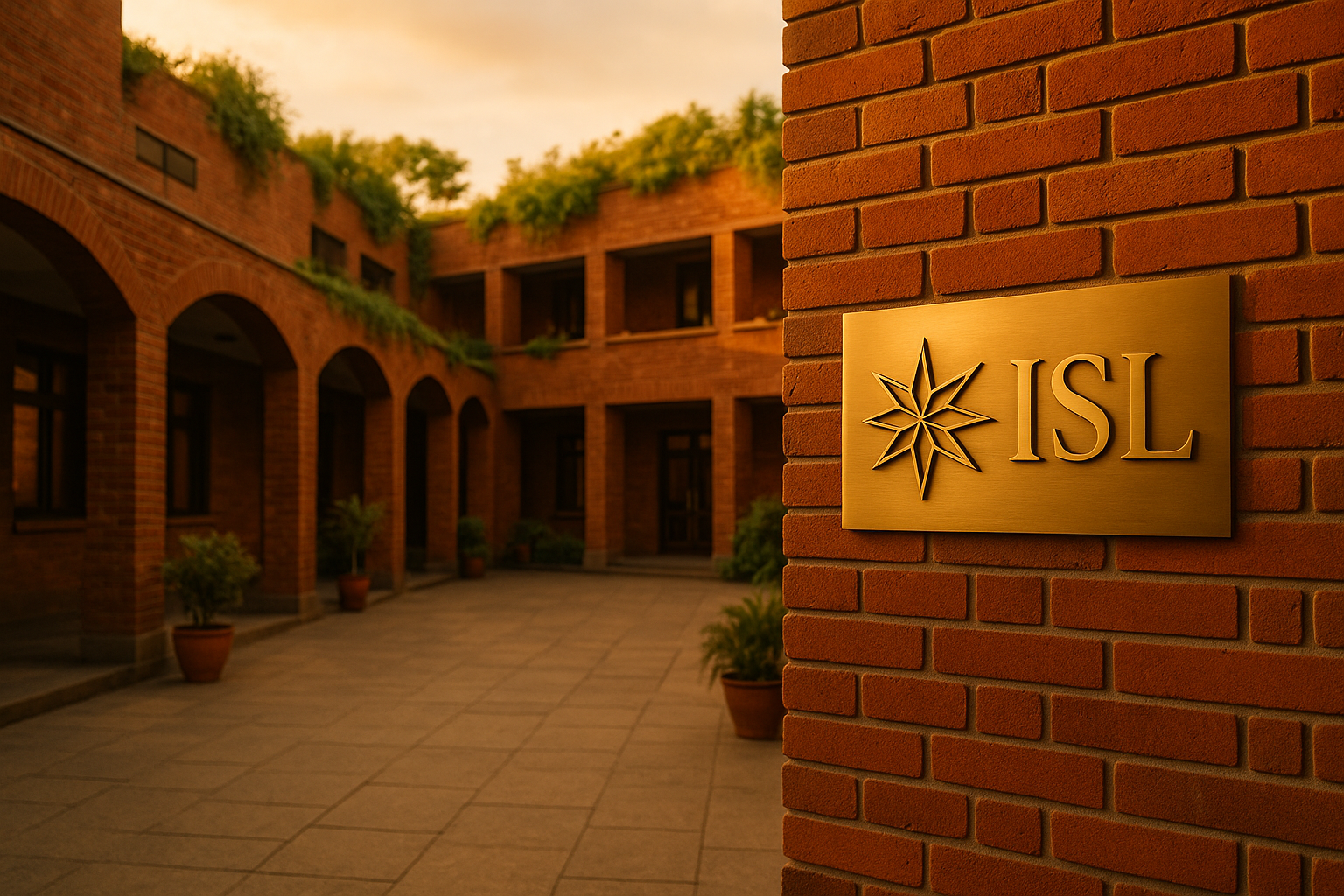
The Indian School of Leadership (ISL), launching in Bangalore in June 2026, is designed to be exactly this. Not a reaction against international education, but an evolution beyond it. A school where the question isn't "which board?" but "what kind of human being are we shaping?"
References
- ISC Research (Jan 2025): The international schools market in 2025
- Times of India (Mar 2025): India now 2nd-largest host of international schools…
- India Today (Jul 2024): Only 51.25% of India’s graduates are employable… (Economic Survey 2023–24)
- ThePrint (Mar 2025): Mercer|Mettl: Graduate Skill Index 2025 (42.6% overall employability; key soft skills)
- Harvard College (FAQ): What admissions criteria do you use?
- World Economic Forum (2025 PDF): Future of Jobs Report 2025
- Finnish National Agency for Education: National core curriculum for primary and lower secondary education
- Government of Singapore (SG101): Our Mother Tongue and Language Proficiency (bilingual policy)
- University of Tokyo: Tokkatsu — the Japanese educational model of holistic education
The best education doesn't teach children to fit into the world as it is. It prepares them to build the world as it should be.
If that's the education you've been looking for — the conversation has begun.